











There are 63 national parks in the United States — and every single one of them is worth visiting. From the geysers of Yellowstone to the sea cliffs of American Samoa, the US national park system covers 52 million acres across 30 states, two territories, and Washington D.C. This is your complete guide: the full checklist of all 63 parks, practical tips for visiting them, and how to track every one you've been to.

What Is the US National Park System?
The National Park Service (NPS) was established in 1916 to manage and protect America's most significant natural and cultural landmarks. Today it oversees more than 400 sites — including national monuments, recreation areas, historic sites, seashores, and parkways — but only 63 of those sites carry the official designation of "national park."
That distinction matters. To earn the "national park" title, a site must contain scenery, natural objects, or wildlife of national significance and be set aside for the enjoyment of future generations without being damaged or altered. The first national park, Yellowstone, was established in 1872. The most recent, New River Gorge in West Virginia, was designated in December 2020.
According to the National Park Service, Americans made over 325 million visits to national parks in 2023 — a record-setting year that reflects a surge in outdoor travel and a growing appetite for the kind of experiences you can't manufacture or replicate.
"There's something about a national park that changes you," says Kenny Azama, founder of The Wander Club, a travel collectibles brand built around the idea of commemorating real adventures. "You leave with a different relationship to scale. The parks put you in your place — in the best possible way."
How Many National Parks Are There in the US?
There are exactly 63 national parks in the United States as of 2026. They span 30 states, two US territories (American Samoa and the US Virgin Islands), and range from the subtropical wetlands of the Everglades to the Arctic tundra of Gates of the Arctic in Alaska.
Quick facts about the national park system:
- Total acreage: approximately 52 million acres
- Most visited: Great Smoky Mountains (~12–13 million visits/year)
- Least visited: Gates of the Arctic (~10,000 visits/year)
- Oldest: Yellowstone (established 1872)
- Newest: New River Gorge (designated 2020)
- Largest: Wrangell–St. Elias, Alaska (13.2 million acres — larger than Switzerland)
- Smallest: Gateway Arch, Missouri (91 acres)
The Complete List of All 63 US National Parks
Use this as your master checklist. Parks are organized by region to help you plan trips efficiently. Each column shows the park name, state, and year it was established as a national park.
Northeast & Mid-Atlantic
| National Park | State | Est. |
|---|---|---|
| Acadia | Maine | 1919 |
| Cuyahoga Valley | Ohio | 2000 |
| Indiana Dunes | Indiana | 2019 |
| Isle Royale | Michigan | 1940 |
| New River Gorge | West Virginia | 2020 |
| Shenandoah | Virginia | 1935 |
Southeast & South
| National Park | State | Est. |
|---|---|---|
| Biscayne | Florida | 1980 |
| Congaree | South Carolina | 2003 |
| Dry Tortugas | Florida | 1992 |
| Everglades | Florida | 1934 |
| Great Smoky Mountains | Tennessee / North Carolina | 1934 |
| Hot Springs | Arkansas | 1921 |
| Mammoth Cave | Kentucky | 1941 |
| Virgin Islands | U.S. Virgin Islands | 1956 |
Midwest & Great Plains
| National Park | State | Est. |
|---|---|---|
| Badlands | South Dakota | 1978 |
| Gateway Arch | Missouri | 2018 |
| Theodore Roosevelt | North Dakota | 1978 |
| Voyageurs | Minnesota | 1975 |
| Wind Cave | South Dakota | 1903 |
Southwest & Desert
| National Park | State | Est. |
|---|---|---|
| Arches | Utah | 1971 |
| Big Bend | Texas | 1944 |
| Bryce Canyon | Utah | 1928 |
| Canyonlands | Utah | 1964 |
| Capitol Reef | Utah | 1971 |
| Carlsbad Caverns | New Mexico | 1930 |
| Death Valley | California / Nevada | 1994 |
| Grand Canyon | Arizona | 1919 |
| Guadalupe Mountains | Texas | 1966 |
| Petrified Forest | Arizona | 1962 |
| Saguaro | Arizona | 1994 |
| White Sands | New Mexico | 2019 |
| Zion | Utah | 1919 |
Rocky Mountains
| National Park | State | Est. |
|---|---|---|
| Black Canyon of the Gunnison | Colorado | 1999 |
| Grand Teton | Wyoming | 1929 |
| Great Basin | Nevada | 1986 |
| Great Sand Dunes | Colorado | 2004 |
| Mesa Verde | Colorado | 1906 |
| Rocky Mountain | Colorado | 1915 |
| Yellowstone | Wyoming / Montana / Idaho | 1872 |
Pacific Coast & California
| National Park | State | Est. |
|---|---|---|
| Channel Islands | California | 1980 |
| Crater Lake | Oregon | 1902 |
| Joshua Tree | California | 1994 |
| Kings Canyon | California | 1940 |
| Lassen Volcanic | California | 1916 |
| Mount Rainier | Washington | 1899 |
| North Cascades | Washington | 1968 |
| Olympic | Washington | 1938 |
| Pinnacles | California | 2013 |
| Redwood | California | 1968 |
| Sequoia | California | 1890 |
| Yosemite | California | 1890 |
Alaska
| National Park | State | Est. |
|---|---|---|
| Denali | Alaska | 1917 |
| Gates of the Arctic | Alaska | 1980 |
| Glacier Bay | Alaska | 1980 |
| Katmai | Alaska | 1980 |
| Kenai Fjords | Alaska | 1980 |
| Kobuk Valley | Alaska | 1980 |
| Lake Clark | Alaska | 1980 |
| Wrangell–St. Elias | Alaska | 1980 |
Hawaii & Pacific Territories
| National Park | Location | Est. |
|---|---|---|
| Haleakalā | Hawaii | 1961 |
| Hawaiʻi Volcanoes | Hawaii | 1916 |
| National Park of American Samoa | American Samoa | 1988 |
How to Visit All 63 National Parks: 5 Practical Tips
Visiting all 63 parks isn't just for hardcore adventurers with months of free time — it's a long-term project that any dedicated traveler can tackle over years of intentional trips. Here's how to approach it smartly.
1. Get the America the Beautiful Annual Pass ($80/year)
The single most important purchase for any serious park visitor. The America the Beautiful Annual Pass gives unlimited access to all 63 national parks and over 2,000 federal recreation sites for $80 per year — for the entire vehicle. It pays for itself after just 3–4 parks, since individual entrance fees typically run $15–$35 per vehicle. Buy it at any national park entrance, or online at store.usgs.gov.
Note: the pass covers entry fees but not camping, lodging, or special activity permits. Book those separately, and book them early — popular campsites at Yosemite and Glacier often fill months in advance.
2. Plan by Region, Not by Name
Don't build your bucket list alphabetically or by popularity ranking. Plan by geography. The most efficient park-visiting strategy is to cluster nearby parks into single trips:
- Utah's Mighty Five: Zion, Bryce Canyon, Arches, Canyonlands, Capitol Reef — all within a few hours of each other. One road trip, five parks.
- Alaska's Big 8: Denali, Glacier Bay, Kenai Fjords, Katmai, Wrangell–St. Elias, Gates of the Arctic, Kobuk Valley, Lake Clark — plan this as a dedicated Alaska expedition.
- California Sierra Nevada: Yosemite, Sequoia, Kings Canyon — a classic California loop.
- Pacific Northwest triangle: Olympic, North Cascades, Mount Rainier — doable in a long weekend from Seattle.
- Florida's three: Everglades, Biscayne, Dry Tortugas — plan Dry Tortugas as a day trip by ferry or seaplane from Key West.

3. Go in Shoulder Season
April–May and September–October are the sweet spots for most parks. Crowds are dramatically lower than peak summer, weather is often better for hiking, and many parks' timed-entry requirements are relaxed or eliminated. Specific exceptions:
- Great Smoky Mountains: October leaf season (mid-Oct) is just as crowded as summer. Visit in April or early November.
- Death Valley: Best in November through March. Summer temperatures regularly exceed 120°F — dangerous without preparation.
- Alaska parks: June through early September is the only practical window. Winter access is extremely limited.
- Glacier: The Going-to-the-Sun Road typically opens in late June or early July depending on snowpack.
4. Use the NPS App and Recreation.gov
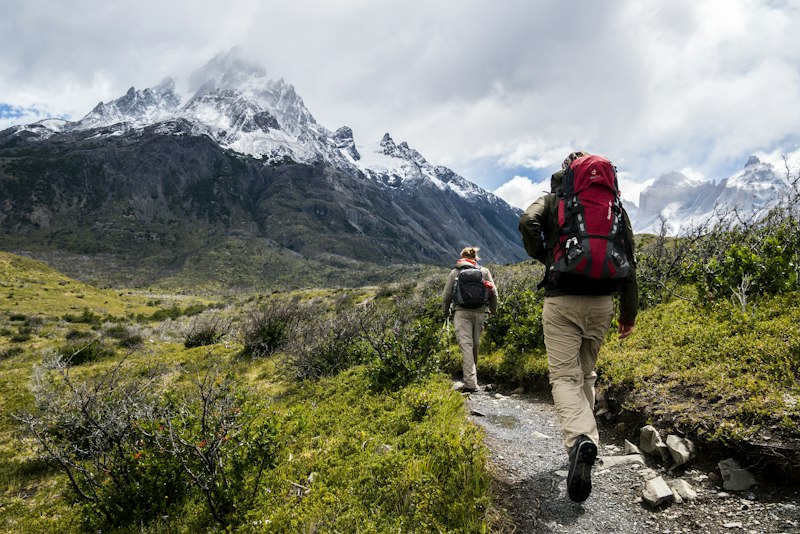
Download the official NPS App (free) before each trip — it works offline and gives you trail maps, ranger programs, operating hours, and alerts even without cell service. For reservations, Recreation.gov is the platform for camping, permits, and timed-entry tickets. Set alerts for permit releases — Half Dome cables permits at Yosemite and wave permits at the Wave in Vermilion Cliffs open via lottery months in advance.
5. Stamp the Passport — and Track Every Park You Visit
The National Parks Passport program lets you collect official stamps at visitor centers throughout the park system. It's a classic way to document your visits. Many serious park-chasers also use physical mementos to mark each park — something tangible you carry with you long after the trip ends.
Most-Visited National Parks: What to Expect
These parks draw millions of visitors every year — which means they require more planning but reward you accordingly.
- Great Smoky Mountains (13M visits/year): Free admission, stunning fall foliage, and more black bears than you'd expect. No reservations required to enter, but parking fills fast at Clingmans Dome and Laurel Falls.
- Grand Canyon (6.4M visits/year): The South Rim is open year-round; the North Rim closes in winter. Rim-to-rim hiking takes 2–3 days. Reserve camping and Phantom Ranch months ahead.
- Zion (4.9M visits/year): The Narrows (wading through the Virgin River) is the bucket-list hike. A mandatory shuttle system runs from spring through fall — plan to arrive before 8am or after 5pm to avoid lines.
- Yellowstone (4.9M visits/year): Old Faithful is the icon, but don't skip Grand Prismatic Spring, the Grand Canyon of the Yellowstone, and Lamar Valley for wildlife. Bison traffic jams are real.
- Rocky Mountain (4.5M visits/year): Trail Ridge Road (the highest continuous paved road in the US) is the drive. Timed-entry reservations required May through October.
Underrated National Parks Worth the Detour
These parks consistently fly under the radar — which means better solitude, easier permits, and the satisfaction of going somewhere most people haven't.
- Congaree (South Carolina): The largest intact expanse of old-growth bottomland hardwood forest in the US. Paddling the Cedar Creek canoe trail at dawn feels like a different planet.
- Great Basin (Nevada): Lehman Caves, bristlecone pines that are over 4,000 years old, and some of the darkest skies in the continental US. One of the least-visited parks — never crowded.
- New River Gorge (West Virginia): The newest national park in the system. World-class whitewater rafting, excellent climbing, and stunning fall foliage. Far easier to access than most people expect (within a day's drive of 60% of the US population).
- Isle Royale (Michigan): An island park in Lake Superior accessible only by ferry or float plane. No cars. True wilderness backpacking. Wolf and moose populations you won't see anywhere else in the Midwest.
- Guadalupe Mountains (Texas): Home to the highest peak in Texas and some of the best fall color in the state. Combines well with Carlsbad Caverns — one night in a cave, the next in the desert highlands.
How to Track and Commemorate Every Park You Visit

The NPS Passport stamp book is the traditional way to mark your visits, but it lives in a drawer between trips. A growing number of park-chasers are building collections of US National Park Tokens from The Wander Club — small enamel coins about the size of a penny, each designed with the park's most iconic landscape and establishment year.
There's a Token for all 63 national parks. They attach to a leather Wanderchain keychain — so instead of a stamp book on a shelf, your collection lives on your keys. Every park you've visited goes on the keychain. Every park on the keychain is a conversation that starts itself.

Each Token can also be engraved on the back with up to 15 characters — the date you visited, a trail name, a word that captures it. A Yellowstone Token with your first visit date on the back isn't just a collectible; it's a record.
The 63 National Park Tokens Bundle

For serious park-chasers who want the full set, The Wander Club offers the 63 US National Park Tokens Bundle Booklet — all 63 Tokens plus a collector's booklet, bundled at 50% off the individual price. It comes with a teal U.S. National Parks keepsake booklet for documenting your visits, notes, and memories from each park.
It's both a tracker and a goal. Start with the parks you've already visited. Let the rest of the collection become your itinerary.
Frequently Asked Questions
How many national parks are there in the US?
There are 63 national parks in the United States as of 2026. The full system managed by the National Park Service includes over 400 sites, but only 63 carry the official "national park" designation. See our complete list above — organized by region — to check off every one.
What is the best way to visit all 63 national parks?
Plan by region, not by name. Cluster nearby parks into single trips — like Utah's Mighty Five, California's Sierra Nevada parks, or Alaska's eight parks in one expedition. Get the America the Beautiful Annual Pass ($80/year) to cover all entrance fees, and use the Recreation.gov platform to book camping and permits well in advance.
What is the most visited national park in the US?
Great Smoky Mountains National Park in Tennessee and North Carolina, with approximately 12–13 million visits per year. It's also the only major national park with no entrance fee. Yellowstone, Grand Canyon, Zion, and Rocky Mountain round out the top five.
How long does it take to visit all 63 national parks?
A continuous trip covering all 63 parks would take a minimum of 3–4 months at 1–2 days per park. Most people spread visits over several years, adding 5–10 parks per year. The Alaska parks are the biggest logistical challenge and usually require a dedicated trip.
Do you need reservations to visit national parks?
Many popular parks now require advance reservations for timed entry — including Yosemite, Glacier, Arches, Rocky Mountain, Acadia, and Zion during peak season. Always check nps.gov before your trip. Some permits (Half Dome cables, the Wave) open via lottery months in advance through Recreation.gov.
What is the America the Beautiful Pass and is it worth it?
The America the Beautiful Annual Pass costs $80 and covers unlimited entry to all 63 national parks and 2,000+ federal recreation sites for one year. It pays for itself after 3–4 parks. Buy it at any national park entrance or at store.usgs.gov. If you're visiting more than 2–3 parks in a year, it's almost always worth it.
How do I keep track of which national parks I've visited?
The NPS Passport stamp book is the traditional method — available at any visitor center. Many park-chasers also build a collection of US National Park Tokens on a leather Wanderchain keychain, so their collection lives with them everywhere they go. The 63 National Park Tokens Bundle gives you the complete set at 50% off, with a collector's booklet included.
Written by Kenny Azama, Founder & CEO of The Wander Club. Kenny launched The Wander Club in 2018 after returning from a backpacking trip with a pocketful of coins from every country he'd visited. Since then, The Wander Club has helped over a million travelers commemorate their adventures — including thousands of dedicated national park completionists working through all 63.